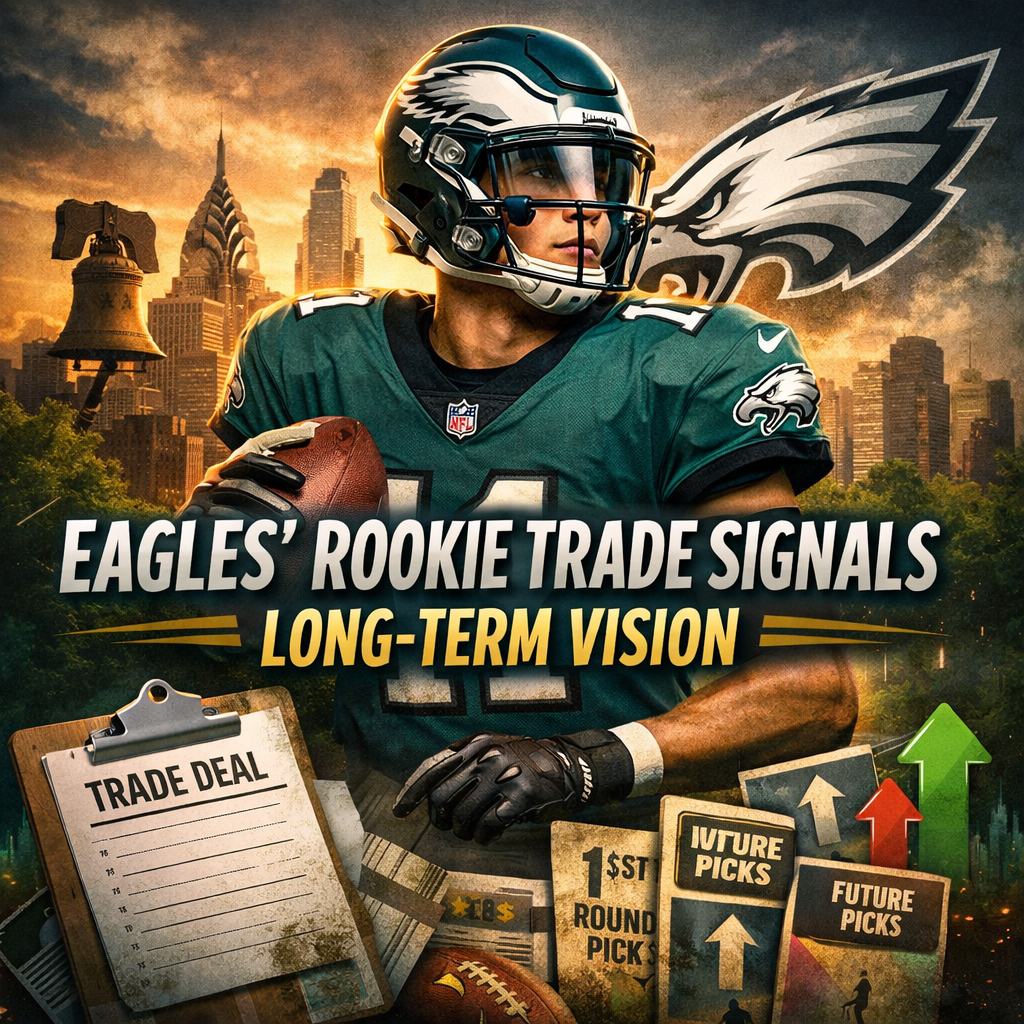
The recent Eagles rookie trade attempt has quietly generated interest among fans and analysts who follow roster strategy closely. While it may not have turned into a finalized deal, the situation offers valuable insight into how the Philadelphia front office evaluates talent, balances depth, and prepares for a competitive season.
Unlike dramatic mid-season trades, rookie-related discussions often happen behind the scenes. These moves are less about immediate impact and more about long-term roster efficiency. In this case, the Eagles appeared to be exploring options that could strengthen their depth while maintaining flexibility for future decisions.
Understanding the Context Behind the Trade Attempt
Teams rarely consider moving a rookie without careful evaluation. When the Eagles rookie trade attempt surfaced, it suggested that the coaching staff had already assessed their depth chart and identified areas where adjustments might be beneficial.
Several common factors typically influence this kind of decision:
- Strong competition at a specific position
- A shift in coaching philosophy
- Interest from other teams
- Opportunity to gain future draft assets
For the Eagles, who have built a reputation for calculated roster management, the move aligns with their history of staying proactive rather than reactive.
Depth Chart Competition and Roster Balance
One of the most practical reasons for the Eagles rookie trade attempt could be positional overcrowding. During training camp and preseason, teams often discover they have more viable players than available roster spots. Instead of risking losing a promising rookie through waivers, exploring a trade can preserve value.
This strategy also creates internal competition. When players understand that roster spots are fluid, performance levels often increase. Coaches benefit from having multiple capable options, and management retains leverage when negotiating potential deals.
Scheme Fit and Coaching Adjustments
Another factor that may have influenced the Eagles rookie trade attempt is scheme compatibility. A player drafted for one style of play may not perfectly match adjustments made by new coordinators or evolving tactics. In such cases, a trade can be mutually beneficial—another team gains a better fit, and the Eagles improve overall roster harmony.
This approach reflects modern NFL thinking, where flexibility is prioritized over rigid roster construction.
Potential Benefits of the Trade
Had the Eagles rookie trade attempt been completed, the team could have gained advantages such as:
- Additional draft capital for future seasons
- Improved balance across position groups
- More playing time for other developing players
- Increased strategic flexibility during the season
These outcomes align with the Eagles’ emphasis on sustained competitiveness rather than short-term solutions.
Why the Deal Might Not Have Happened
Trade negotiations often stall for routine reasons. Compensation disagreements, timing issues, or changing team needs can all prevent a deal from materializing. The fact that the Eagles rookie trade attempt did not result in a confirmed move does not necessarily indicate a failed evaluation. Instead, it reflects the dynamic nature of roster decisions.
Teams frequently revisit similar discussions later in the season, particularly when injuries or performance shifts create new needs.
Impact on the Rookie’s Development
Interestingly, being part of a trade discussion can sometimes benefit a rookie. It demonstrates that other teams recognize potential value. Additionally, the player may receive increased attention from coaches eager to reassess performance before making future decisions.
The Eagles rookie trade attempt could therefore serve as motivation, encouraging stronger performances and greater adaptability.
What This Says About the Eagles’ Strategy
The biggest takeaway from the Eagles rookie trade attempt is the organization’s commitment to flexibility. Rather than locking into early decisions, the front office continues to evaluate options. This proactive mindset has helped the team remain competitive in recent seasons.
It also shows that every roster spot is viewed as an asset. Even rookies are part of a larger strategic picture that includes depth, finances, and long-term planning.
Could Another Trade Happen?
Roster management is an ongoing process. The Eagles rookie trade attempt may not be the last discussion involving young players. As preseason games provide more data and roster cuts approach, teams often revisit earlier negotiations.
If the Eagles identify another opportunity to strengthen their lineup or accumulate future assets, similar conversations could quickly resurface.
Final Thoughts
The Eagles rookie trade attempt may seem minor on the surface, but it highlights how modern NFL teams approach roster building. Success often depends on adaptability, depth, and long-term thinking. By exploring trade possibilities early, the Eagles demonstrate their willingness to refine the roster in pursuit of sustained success.
Whether or not the move ultimately happens, the situation reflects a disciplined strategy—one that values flexibility, competition, and forward planning.